


High and defined cheekbones, a sharp jawline, and a prominent chin are globally recognized as structural pillars of facial aesthetics. However, substantial weight loss and the natural chronological aging process lead to a noticeable depletion of deep facial fat pads and tissue volume. Although bone, muscle, and sub-dermal fat volumes diminish, the surface area of the overlying skin remains unchanged. Compounded by the gradual degradation of structural collagen and elastin fibers, the structural scaffolding holding these facial layers in place weakens, causing the tissues to sag downward. This structural descent shifts the facial contours, flattening the cheeks, hollowing the sub-orbital regions, and creating a heavy, distorted jawline that leaves individuals looking older and chronically fatigued. To reverse this structural descent without surgery, advanced medical aesthetic protocols like the Liquid Facelift have gained widespread Practiceal prominence.
What is a Liquid Facelift?
As the skin ages, rapid structural degradation occurs within the extracellular matrix, specifically targeting the integrity of elastin and collagen fibers. Concurrently, the resorption of deep facial fat pads leads to a hollowed, sunken, and fatigued facial expression. The Liquid Facelift offers a non-surgical intervention designed to counteract this structural aging process, largely restoring youthful contours and eliminating the signs of premature aging.
A Liquid Facelift is a highly comfortable, outpatient procedure that completely bypasses the need for surgical incisions. By utilizing advanced formulations containing Poly-L-Lactic Acid (PLLA) microparticles combined with cross-linked hyaluronic acid, this protocol triggers neocollagenesis—the body’s natural production of type-I collagen within the deep dermal layers. This biological response repairs compromised dermal tissue while providing natural, highly bio-compatible structural volume. Bridging the gap between traditional dermal fillers and intensive mesotherapy, the presence of PLLA ensures that even as the initial fluid carrier resorbs, the ongoing biostimulatory cascade maintains a sustained, long-term volumetric effect.
While standard dermal fillers operate solely by mechanically occupying space to smooth localized rhytids, the Liquid Facelift approach looks at the face globally. It focuses on lifting redundant, sagging skin tissue, filling deeper temporal and malar hollows, minimizing infraorbital hollows, and smoothing deeper dynamic wrinkles across the forehead, perioral, and periorbital regions.
How is a Liquid Facelift Performed?
Characterized by its ease and patient comfort, this medical aesthetic treatment avoids systemic general anesthesia and extensive surgical downtime, allowing patients to resume their professional and social schedules immediately following the session.
Prior to initiation, a rigorous Practiceal assessment is performed to map the structural deficits of the face. The target zones are thoroughly sanitized with medical-grade antiseptics, followed by the application of a high-potency topical local anesthetic cream. Once optimal dermal numbness is achieved within 15 to 20 minutes, the customized bio-stimulatory formulation is precisely introduced into the deep supraperiosteal or subdermal planes using ultra-fine needles or micro-cannulas.
The procedure is entirely pain-free. While the structural and aesthetic improvements achieved typically persist for an average of 18 to 24 months, individual longevity varies based on metabolic rate, lifestyle factors, and the baseline characteristics of the patient’s skin matrix.
The primary volumizing agent used is hyaluronic acid, a naturally occurring glycosaminoglycan capable of binding up to a thousand times its molecular weight in water, making it the premier choice for expanding tissue volume and restoring optimal dermal hydration. For specialized indications, alternative biostimulatory matrices containing Calcium Hydroxylapatite (CaHA) or Polycaprolactone (PCL) may be integrated; these offer a subtler immediate volume expansion but provide an extended timeline for long-term structural collagen remodeling.
Post-Treatment Care and Recovery Guidelines
In alignment with minimally invasive injectables, a Liquid Facelift carries no severe Practiceal risks. Minor localized erythema (redness) and superficial ecchymosis (bruising) at the injection entry points are standard physiological responses that spontaneously resolve within a week. The protocol does not induce chronic, long-term edema or facial distortion.
Because the treatment targets the deep structural and pre-periosteal layers beneath the facial musculature, it yields a highly natural, refreshed appearance without an overfilled or artificial look. To maximize the dispersion and efficacy of the biostimulatory molecules, patients are strictly advised to adhere to a post-treatment massage protocol: gently massaging the treated zones 5 times a day, for 2 minutes per session, across the first 5 days. High-intensity physical exertion, strenuous exercises, and extreme thermal exposure (such as saunas or steam rooms) must be avoided during the initial healing phase.
Longevity and Ideal Candidates
The total procedure time spans 30 to 60 minutes, delivering stable aesthetic improvements that endure for 1.5 to 2 years depending on the selected product viscosity, total administered dosage, and injection technique. A routine follow-up evaluation is scheduled at the 1-week mark to assess product integration, balance symmetry, and perform precise, minor touch-ups if required.
Ideal Candidates: This protocol is highly indicated for individuals presenting with mild-to-moderate cutaneous laxity, early-stage jowl formation, prominent nasolabial folds, and moderate malar fat pad depletion. Individuals exhibiting advanced, severe skin laxity and deep structural sagging are poor candidates for non-surgical biostimulation and should instead be referred for a surgical rhytidectomy (facelift) to achieve their desired Practiceal goals.
Contraindications: A Liquid Facelift cannot be administered to individuals who are pregnant or lactating, or patients diagnosed with active bleeding disorders, uncontrolled diabetes mellitus, systemic autoimmune or immunologic diseases, and progressive neuromuscular disorders. A thorough medical history review is mandatory prior to treatment initiation to ensure patient safety.
Liquid Thread Lift (Gouri) Before & After
Tap or click on the image to view in high resolution.
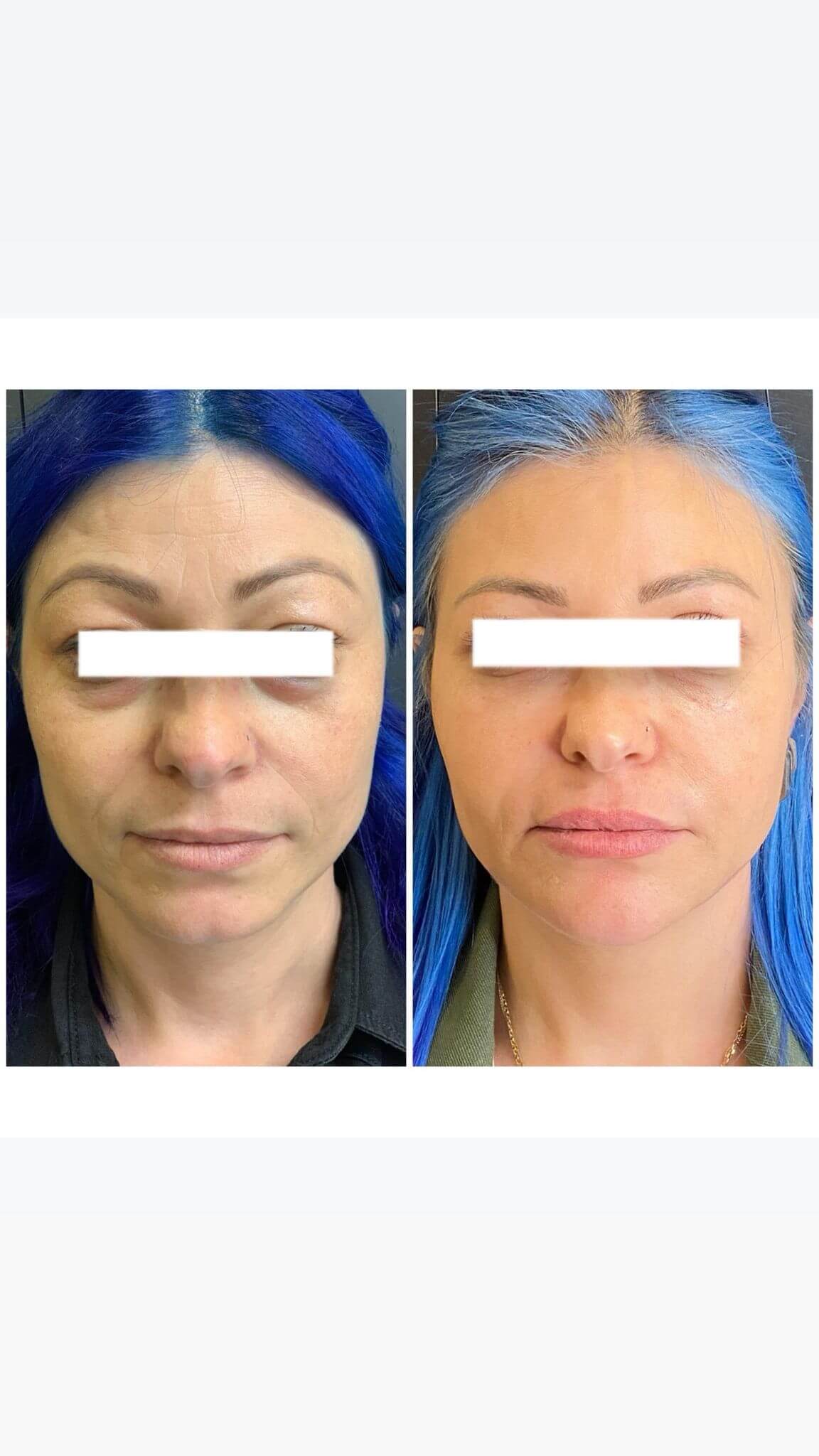
Treatment outcomes depend on skin elasticity, collagen synthesis rate, patient age, and the individual session protocol.


